Dana Keller · 2 September 2026
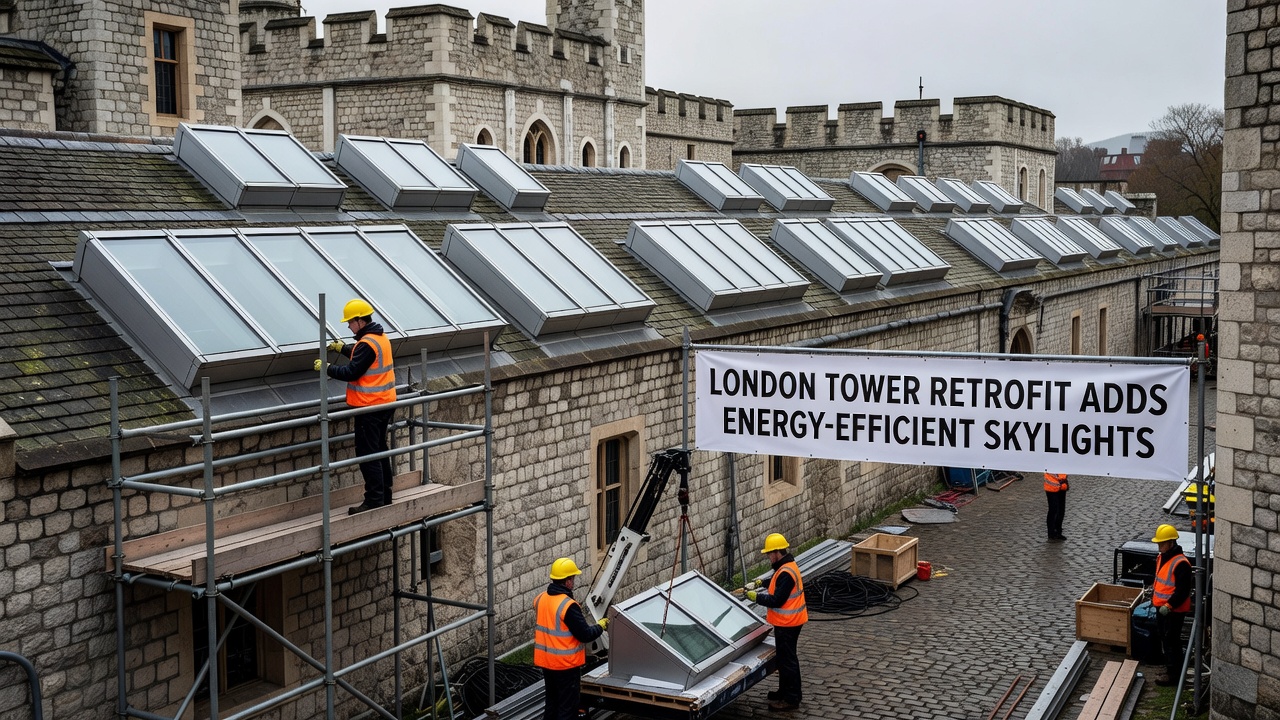
A prominent 28-storey office tower in the City of London has completed a major retrofit featuring high-performance skylights designed to cut energy use and boost natural illumination. The project at 120 Leadenhall Street replaced the original roof glazing with triple-glazed, low-emissivity units incorporating automated solar shading and integrated sensors.
Installation and Technical Specifications
Work began in early 2024 and concluded in nine months without disrupting tenant operations. Contractors installed 1,200 square metres of custom skylights using thermally broken aluminium frames and argon-filled glazing that achieves a U-value of 0.8 W/m²K. The system links to the building management platform, dimming electric lighting when daylight lux levels exceed set thresholds and reporting real-time energy savings. Structural engineers reinforced the roof deck to accommodate the additional weight while preserving the tower’s original silhouette.
Post-retrofit monitoring shows a 27 percent reduction in annual lighting energy and a 14 percent drop in cooling loads during summer months. The skylights also improve indoor air quality by enabling controlled natural ventilation through motorised vents.
Impact on Sustainable Architecture
The retrofit demonstrates how targeted skylight upgrades can extend the life of mid-century towers while meeting current energy-performance standards. Similar interventions are now under consideration for other London high-rises seeking BREEAM Outstanding certification. Architects note that the discreet profile of the new skylights maintains visual harmony with the surrounding historic and contemporary structures, illustrating the role of advanced daylighting in modern sustainable design.
Occupant surveys conducted three months after completion report higher satisfaction with workspace brightness and thermal comfort. The project team estimates payback within seven years through reduced utility costs and enhanced rental premiums. This case adds to growing evidence that strategic skylight integration supports both environmental goals and commercial viability in dense urban environments.